Spring: etymology, customs, types, season, symbols, holydays
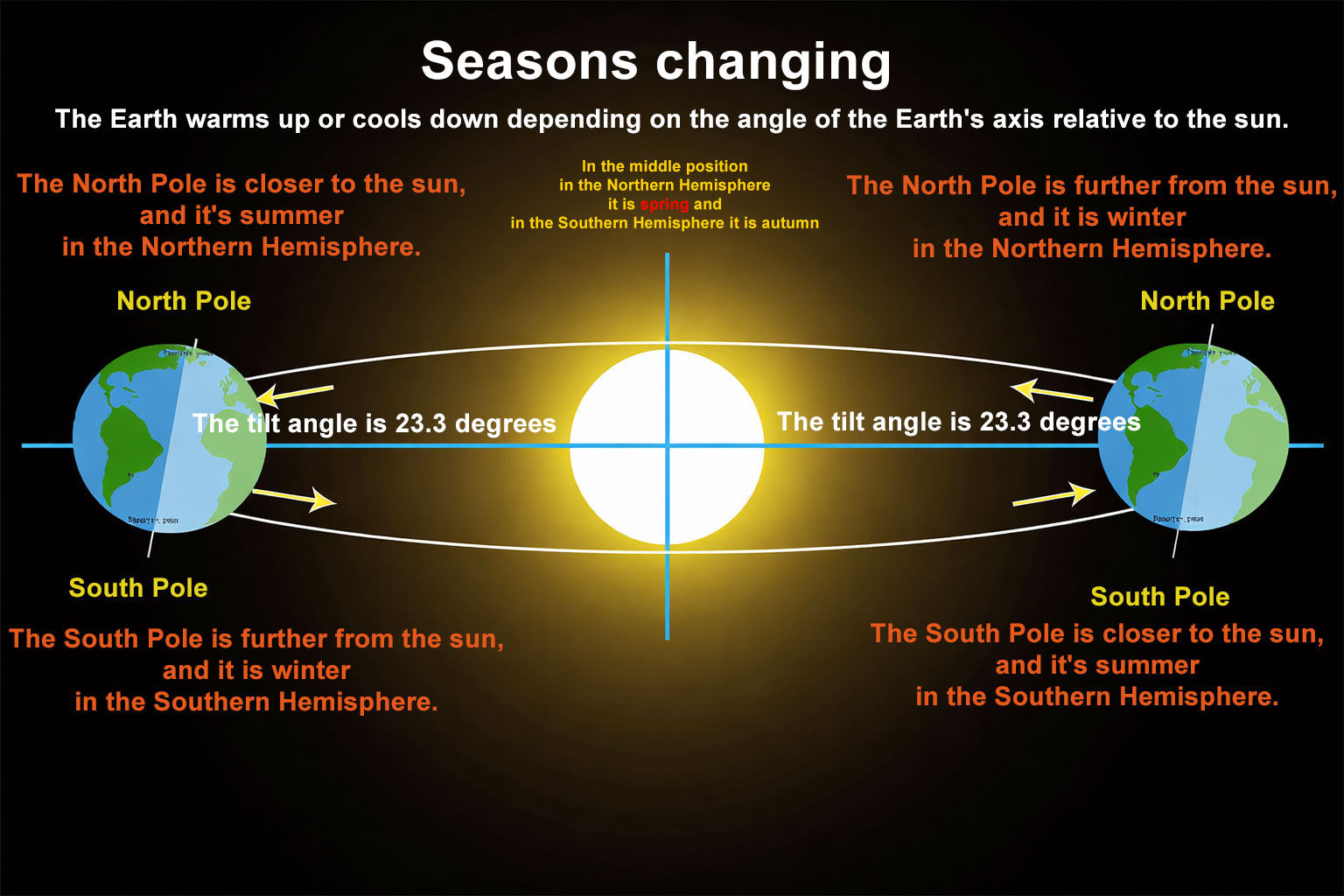
📥 Download PDFSpring is one of the four seasons, serving as the transitional period between winter and summer. When spring arrives in the Northern Hemisphere, it is autumn in the Southern Hemisphere, and vice versa.
During spring, nature awakens from its winter slumber. The environment grows warmer, daylight hours begin to lengthen, and plants start to grow and bloom.
As the snow melts, migratory birds return from the south. In some regions, water levels rise, which can occasionally lead to flooding.
Spring is regarded as a season of renewal, romance, and inspiration. It is a time of year that many people look forward to with great anticipation.
History of the Word
According to the Online Etymological Dictionary (etymonline.com), the word "spring" didn't always refer to the season. Back in the 14th century, people used phrases like "springing time" or "the spring of the year" to describe the period when plants began to sprout. At that time, the word functioned as a noun meaning a "beginning," "birth," or the "first appearance" of something.
The word itself evolved from the Middle English springen and the Old English springan. Originally, these were simply verbs that meant to "burst forth" or "rise up"—much like the modern German word springen, which means "to jump." Linguists believe these early verbs weren't actually connected to the seasons at first; they all eventually trace back to the Proto-Germanic root sprenganan.
General Information
The spring season is the time of year everyone eagerly awaits after growing weary of winter. It is often called the "long-awaited season." Sometimes, the first hints of spring appear as early as February; even a slight increase in sunlight starts melting the icicles, and the cheerful sound of dripping water reminds us that spring is near. Even if frost or snow returns after such a moment, everyone understands that warmth will soon arrive to bring joy.
The sun stays in the sky longer, and the heavens brighten into a deep, vibrant blue. Everywhere you look, snow melts and streams begin to flow. Although the ground is still cold, damp, and firm, the very first flowers and plants—such as the snowdrop—can be seen emerging from the remaining patches of snow.
Life stirs in the forest as animals wake from their winter hibernation and migratory birds return. Many animals are busy building cozy nests or digging burrows, as they need a secure home to raise their young.
The arrival of spring marks the awakening of nature and the beginning of active life. Buds swell, the earth opens up, and delicate green leaves appear, growing with remarkable speed. Within a week, trees become covered in foliage that rustles softly in the spring breeze. Plants emerge from the soil, flowers bloom in the fields, birds sing, and insects begin to crawl—life is visible everywhere. People start cleaning their yards and streets during community clean-up days (ishembiliks), while farmers sow seeds in the fields to prepare for the autumn harvest. Heavy winter clothes are finally tucked away in favor of lighter attire.
In the opinion of many, spring is the most wondrous time of the year. Because its arrival happens so quickly, the changes in nature take place right before our eyes. Each day of spring brings us closer to summer, the warmest and most beloved season. The onset of spring brings a feeling that something new, wonderful, and joyful is coming, which is why everyone welcomes the season with happiness.
Types
The spring season is categorized into four distinct types:
- Astronomical
- Calendar
- Climatological
- Phenological
Astronomical Spring
Astronomical spring begins at the moment of the vernal equinox, occurring on March 20 (or March 21 in years preceding a leap year) in the Northern Hemisphere, and on September 22 or 23 in the Southern Hemisphere. It lasts until the summer solstice, which falls on June 21 (or June 20/21 in years preceding a leap year) in the Northern Hemisphere, and on December 21 or 22 in the Southern Hemisphere. These dates are provided in Universal Time (UTC); a difference of one day may occur depending on specific time zones.
Calendar Spring
Calendar spring consists of three months: in the Northern Hemisphere, these are March, April, and May, while in the Southern Hemisphere, they are September, October, and November. As a transitional season, spring is characterized by lengthening daylight hours, rising environmental temperatures, and the revitalized biological activity of both plants and animals.
Climatological Spring
In meteorology, climatological spring is considered to have arrived when the average daily temperature begins to consistently rise above 0°C.
Phenological Spring
Phenology is a branch of biological science that studies the patterns and seasonality of animals and plants in relation to climatic conditions.
In a global sense, phenological spring is typically associated with the awakening of nature: the start of plant growth, the return of migratory birds, and animals emerging from winter hibernation.
Various researchers suggest different annual natural phenomena as markers for the beginning and end of spring. For instance, the arrival of spring can be calculated from the moment sunlight begins to melt the snow, patches of dry ground appear in fields, icicles form on unheated rooftops, springs no longer freeze at night, and plants resume their growth.
Because regional environments vary so significantly, there are no uniform or universal markers for phenological spring. Spring comes even to places where it never snows or where vascular plants do not grow. Therefore, it is only possible to define the markers of phenological spring for a specific territory or natural object.
Symbols
In different countries around the world, various animals and plants are used as symbols of spring. For example, in Germanic countries, the hare and the yellow daffodil are considered primary symbols. In both ancient and modern Greece, the egg serves as a symbol of spring; this tradition is so ancient that its exact origins remain a mystery. In China, the Green Dragon represents spring, standing as a symbol of goodness, benevolence, and prosperity. Its green color reflects the element of Wood, which in Chinese philosophy governs youth, vitality, and growth.
European mystics also assign a numerical value to spring: the number 3, which corresponds to renewal and rebirth. In Japan, the heralds of spring are the delicate blossoms of plum and sakura (cherry blossoms), as these are among the first trees to bloom. In Ukraine, the lark is a cherished symbol, as its arrival signals the beginning of the warm season, alongside the birch tree. In England, the iconic snowdrop holds this title.
In terms of color, green is the universal symbol of awakening nature and spring across Western countries, China, and many other regions.
Regarding flora, spring is often associated with mimosa, snowdrops, and lilacs. In the Eastern Mediterranean, the almond blossom is the definitive sign of the season.
In summary, every country has its own unique plants, objects, colors, and specific dates that capture the essence of spring.
Psychology and Health
While in spring we often focus on the changing landscape around us, our bodies undergo shifts as well. This acts as a biological "reset" that impacts our overall well-being and how we function. Below, we explore the most common changes.
The Sunshine Vitamin and Mood
As daylight hours increase, the body’s exposure to sunlight rises, stimulating the production of serotonin—often called the "feel-good hormone." This naturally boosts our mood and energy levels, helping to clear away the "winter blues" or the seasonal sluggishness many experience during the darker months. At the same time, the brain scales back the production of melatonin, the hormone that causes drowsiness, making it easier to wake up early with the sunrise.
Spring Fever
You’ve likely heard the term "spring fever." From a psychological perspective, this isn't an illness, but rather a collection of physical and emotional symptoms. As the weather warms up, blood vessels dilate to release heat, and the heart functions slightly differently. This can lead to a curious mix of restlessness, daydreaming, and sudden bursts of physical energy. It is the mind's way of signaling that it’s time to move, explore, and start something new.
The Challenges of Transition
Spring can be quite taxing on the body. This transitional season can be physically demanding:
- Some individuals experience temporary tiredness because of their metabolism adjusting to warmer temperatures and increased levels of activity.
- Psychologically, spring acts as a "temporal landmark." Much like the New Year, it provides a mental cue to leave old habits behind. It is the ideal time for a "mental declutter"—shedding the stressors accumulated during the winter months.
- Walking in "green" environments has been proven to lower cortisol (the stress hormone) significantly more than walking in urban or indoor settings.
- In spring, incorporating the first seasonal greens—such as spinach, wild garlic, or radishes—is a simple way to add more Vitamin C and minerals to your diet.
Environmental Hazards
Spring brings a specific set of ecological shifts that can present real dangers.
Key Environmental Risks
- Rapid snowmelt can overwhelm riverbeds and drainage systems. This runoff can lead to unpredictable flooding in low-lying areas, even if there has been no recent rain.
- For regions with frozen water bodies, spring is a high-risk period. Ice may be thawing from below due to rising water temperatures and currents, making it fragile. Therefore, venturing onto ice in the spring is strongly discouraged.
- Soil saturated by meltwater and spring rains loses its stability. In hilly or mountainous terrain, this is a risk of landslides and debris flows.
- Frosts may strike in the spring, which can damage or kill some plants.
- Pollen, dust, and dried mold can be dangerous for people with allergies.
Art and Culture
Spring has historically served as a central motif in global artistic and cultural traditions, often associated with the vernal equinox, which occurs around March 20 or 21 in the Northern Hemisphere. In ancient Roman religion, the festival of Hilaria was celebrated on March 25 to mark the resurrection of Attis. Similarly, the Iranian New Year, Nowruz, has been observed for over 3,000 years, coinciding with the astronomical beginning of spring.
In Western art history, the season became a distinct subject during the Renaissance. Sandro Botticelli's Primavera (c. 1480) remains one of the most cited examples, featuring complex mythological allegories. During the 19th century, Impressionist painters such as Claude Monet and Pierre-Auguste Renoir focused on the shifting light and biological changes of the season, producing works like Monet’s Springtime (1872). In music, Antonio Vivaldi’s The Four Seasons (1725) includes "Spring" (Concerto No. 1 in E major), which uses musical notation to mimic birdsong and thunderstorms. Igor Stravinsky’s ballet The Rite of Spring, premiered in Paris on May 29, 1913, shifted the cultural depiction of the season toward a more primal and avant-garde interpretation, famously causing a riot during its debut.
Spring Residential Seasonal Adaptation
Residential spring adaptation is driven by the astronomical increase in daylight and changing climatic parameters. According to building maintenance standards, the accumulation of winter soot and atmospheric pollutants on window glazing reduces light transmission by 10% to 30%, necessitating surface cleaning to restore natural interior illuminance.
Spring marks the termination of the heating season. In jurisdictions across Central and Eastern Europe, municipal codes typically mandate the deactivation of central heating when the average outdoor temperature remains above 8°C (46°F) for five consecutive days. In the United Kingdom and the United States, there is no universal temperature threshold; instead, local housing codes (such as New York City's "Heat Season" laws) require landlords to maintain indoor temperatures of at least 20°C (68°F) until specific dates, usually ending in late May. During winter, indoor relative humidity in heated buildings often drops to 15–20%, increasing static electricity and the settlement of fine particulate matter on textiles. Spring ventilation, or "airing out," is a documented method to equalize water vapor partial pressure and reduce concentrations of indoor air pollutants, such as radon and carbon dioxide, that accumulate during winter sealing.
Operational shifts in spring include the decommissioning of heating equipment. International standards for indoor environmental design, such as ISO 16813, and World Health Organization (WHO) guidelines emphasize that cleaning radiators and replacing air filters during the March–April period prevents the recirculation of aeroallergens. During spring, outdoor pollen and mold spore concentrations can peak at levels between 1,000 and 5,000 grains per cubic meter, making filtration and dust removal a functional necessity for maintaining indoor air quality.
Spring Agronomy and Soil Management
Agricultural activity in spring is synchronized with the soil temperature and the specific thermal requirements of various crops.
The physiological activity of cold-hardy crops and soil microbiota (microscopic organisms such as bacteria and fungi) initiates when the soil temperature at a depth of 10 cm reaches a consistent 5°C (41°F). This thermal threshold serves as a baseline for calculating Growing Degree Days (a measure of heat accumulation used to predict plant development rates).
According to FAO (Food and Agriculture Organization) standards, removing residual vegetation from the previous season is a phytosanitary measure (a process to control plant diseases) that reduces the overwintering population of pests by up to 70%.
Spring maintenance of perennial woody plants (fruit trees and shrubs) is centered on dormant pruning (the removal of branches before the buds begin to swell).
Removing deadwood and thinning the canopy increases solar penetration and airflow, which reduces the incidence of fungal infections. For apple trees (Malus domestica), soil aeration (loosening the earth to improve gas exchange) at the base of the trunk facilitates the uptake of nitrogen, which is critical for the initial vegetative stage.
Soil management in spring is dictated by the Plastic Limit (the moisture content at which soil begins to behave like a plastic material). If soil is worked while saturated, it leads to compaction, which destroys the pore space necessary for root respiration. When soil conditions allow, the incorporation of organic matter, such as compost with a Carbon-to-Nitrogen (C:N) ratio of approximately 25:1 to 30:1, provides the necessary nutrients for seedling development.
Specific cold-hardy crops are capable of germination at soil temperatures as low as 2°C to 4°C (35°F to 39°F). These include:
- Root vegetables: Radishes and early carrots.
- Leafy greens: Lettuce, dill, and parsley.
- Legumes: Peas and beans.
These crops utilize the high moisture content of spring soil, which typically ranges from 20% to 30% by volume following the snowmelt, to establish root systems before the onset of higher summer temperatures.
Spring Biological Risks, pests and domestic animals
The increase in ambient temperature and photoperiod (the length of daily light exposure) in spring triggers the metabolic reactivation of insects and parasites. Managing these risks requires specific physical barriers and chemical prevention.
Pest Mitigation and Structural Integrity
The seasonal activity of insects is governed by the Lower Development Threshold (the temperature below which an insect's development stops).
- For common pests like Musca domestica (housefly) and Culicidae (mosquitoes), window screens must have a mesh size no larger than 1.2 mm (18x16 mesh, meaning 18 horizontal and 16 vertical threads per square inch) to prevent entry. Integrity checks of door seals should focus on gaps larger than 1.5 mm, which are sufficient for Formicidae (ants) to penetrate.
- Mosquitoes require stagnant water for their larval stage, which lasts 7 to 14 days depending on the temperature. Clearing gutters and containers eliminates habitats where female mosquitoes can lay up to 200 eggs at a time.
- Sanitation: To deter Blattodea (cockroaches) and ants, food storage must be hermetic. Many insects can detect glucose and protein traces at concentrations of only a few parts per million.
Veterinary and Toxicological Safety
Spring environmental changes introduce specific physiological risks to domestic animals and humans.
- Ectoparasite Activity: Ticks (e.g., Ixodes ricinus) become biologically active when the ground temperature reaches 4°C to 7°C (39°F to 45°F). According to veterinary protocols, preventative acaricide (tick-killing) treatments should be administered as soon as the snow cover recedes, as the risk of Lyme disease and Tick-borne encephalitis increases significantly in the March–May period.
- Phytotoxicity (Plant Poisoning): Many spring flora contain compounds toxic to pets and humans.
- Lilies (Lilium): Extremely nephrotoxic (damaging to kidneys) for cats; ingestion of even two petals can cause acute renal failure.
- Tulips and Daffodils: Contain alkaloids and glycosides, with the highest concentration in the bulbs. Accidental ingestion occurs when humans mistake these bulbs for culinary onions or when pets unearth them while digging, leading to severe vomiting and respiratory distress in humans and potentially fatal cardiac arrhythmias (irregular heartbeat) in dogs and cats.
- Allergen Exposure: The spring season coincides with the maximum release of anemophilous (wind-pollinated) pollen. When atmospheric concentrations exceed 50 grains per cubic meter, this density is sufficient to trigger allergic rhinitis in sensitized individuals (people whose immune systems have already developed a specific allergic reaction), while causing general respiratory irritation in others.
- Avian and Rodent Nesting: Spring is the primary breeding season for birds and small mammals. Obstructions in ventilation shafts or chimneys by nesting materials can lead to Carbon Monoxide (CO) accumulation. Checking these vents before the full termination of the heating season is a fire and air quality safety requirement.
Facts
- Spring in Australia begins in September.
- In the Northern Hemisphere, March 21 is the day of the vernal equinox. This marks the start of astronomical spring on Earth, which is why the famous Nooruz holiday is celebrated at this time.
- British scientists have confirmed that children grow faster during the spring than during the period from August to December.
- Plant roots are among the first to respond to spring warmth: they begin to grow actively at temperatures between 7°C and 10°C.
- The idea that people "fall in love" more often in spring is actually a misconception. People simply experience a light sense of euphoria from nature's awakening; hormones and sexuality remain relatively consistent throughout all seasons of the year.
- The Japanese Sakura (cherry blossom) is one of the first trees to bloom, ahead of many others.
- Bees are notably less aggressive during the spring compared to other seasons.
- People breathe three times more frequently in the spring than they do in the autumn.
Holidays
Many countries and cultures have established holidays and traditions that coincide with the spring season. These observances are primarily governed by astronomical cycles—such as the vernal equinox—and lunar calendars, marking themes of renewal, purification, and the start of the agricultural cycle.
Nowruz (Persian New Year): Celebrated for over 3,000 years by more than 300 million people in Central Asia, the Balkans, and the Middle East. It occurs exactly at the vernal equinox, symbolizing the renewal of nature. Traditions include the Haft-sin table and ritual house cleaning.
Holi (Festival of Colours): A major Hindu festival signaling the end of winter. It is characterized by the public throwing of colored powders (gulal), which represents the vibrant colors of the blooming season and the victory of good over evil.
Songkran (Thai New Year): Celebrated in mid-April, this festival is famous for mass water fights. The water symbolizes ritual cleansing, washing away the misfortunes of the previous year to welcome the new planting season.
Hanami: The Japanese tradition of "flower viewing," specifically focusing on the Sakura (cherry blossom). While not a single fixed holiday, it dictates national travel patterns and social gatherings for a two-week period as the "bloom front" moves across the country.
Religious and Spiritual Cycles
Spring contains the most significant observances for the world’s major religions, often centered on themes of liberation or resurrection:
Easter: The primary Christian feast celebrating the resurrection of Jesus. It is a "movable feast," falling on the first Sunday after the first full moon following the spring equinox. Traditions vary globally, including the decoration of eggs as symbols of new life.
Passover (Pesach): A Jewish holiday commemorating the Exodus from Egypt. It involves the Seder (ritual meal) and the strict avoidance of leavened grain products (chametz) in favor of unleavened bread (matzah).
Ramadan and Eid al-Fitr: Because the Islamic calendar is lunar, the month of fasting (Ramadan) and the subsequent festival of breaking the fast (Eid) rotate through the seasons, frequently occurring during the spring months over a 33-year cycle.
Vesak (Buddha Day): Commemorating the birth, enlightenment, and death of Gautama Buddha. It is observed during the full moon in May (or April in some traditions) across East and Southeast Asia, involving visits to temples and acts of charity.
Regional Folklore
Walpurgis Night: Observed in Northern and Central Europe on the night of April 30. It involves lighting large bonfires to ward off evil spirits and welcome the definitive arrival of warm weather.
Martinitza / Baba Marta: A Balkan tradition (primarily Bulgaria and Romania) where people wear red and white intertwined threads starting March 1 to welcome spring, removing them only when they see the first sign of a returning migratory bird or a budding tree.
Astrological Signs
The zodiac signs for people born during the spring season include Pisces, Aries, Taurus, and some Geminis.